Most restaurants use different tools for POS, reservations, and ordering. At first, this seems manageable. Each system does its job.
But as the restaurant grows, these separate systems start creating gaps. Those gaps affect bookings, orders, staff workflow, and overall revenue.
This is why many restaurants are moving toward integrated AI restaurant systems like ResButler instead of managing multiple disconnected tools.
What Happens When POS, Reservations, and Ordering Systems Are Separate?
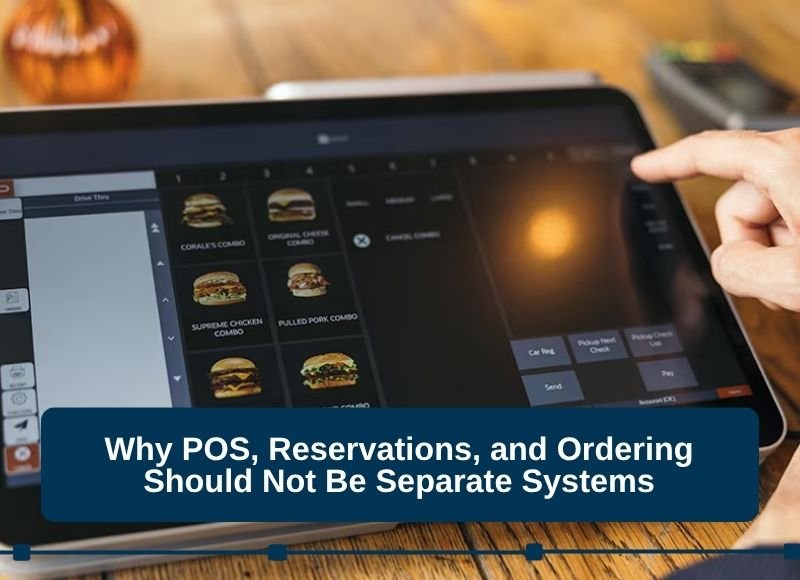
When systems are not connected, each one works in isolation. The reservation system handles bookings. The POS system handles payments. The ordering system manages food orders. There is no shared flow between them. This creates situations where:
- Booking data does not reflect real-time table status
- Orders are not linked with reservations
- Staff switch between systems during service
Over time, this slows down operations and increases errors.
Why Do Restaurants Still Use Multiple Systems?
Many restaurants adopt tools at different stages. They might start with:
- A basic restaurant reservation software
- Then add a POS system
- Later include an online ordering system
Since these tools come from different providers, they do not always integrate well. The result is a setup where systems work side by side, but not together.
What Problems Do Disconnected Restaurant Systems Create?
The biggest issue is lack of coordination. When systems do not share data, restaurants face:
Operational Delays
Staff need to check multiple systems to confirm one action. This slows down service during busy hours.
Data Mismatch
A table may show as available in one system but occupied in another. This leads to booking conflicts.
Manual Adjustments
Staff often need to fix issues manually, such as updating tables or syncing orders with bookings.
Increased Errors
Mistakes happen when information is repeated across systems. This affects both orders and reservations. These problems may seem small at first, but they grow with volume.
How Do Separate Systems Affect Staff Workflow?
Front-of-house teams handle reservations, seating, and guest service. At the same time, they manage communication with the kitchen. When systems are separate, staff must:
- Check bookings in one system
- Process orders in another
- Confirm payments in a third
This creates unnecessary steps. Instead of focusing on guests, staff spend more time managing systems. This increases pressure during peak hours.
How Do Separate Systems Impact Customer Experience?
Guests expect a smooth experience from booking to payment. Disconnected systems can affect this in several ways.
A guest might:
- Arrive for a booking that is not updated correctly
- Experience delays in order processing
- Face confusion during billing
Even small delays can affect how the experience feels. A restaurant may provide good food, but poor system flow can still impact satisfaction.
How Do Disconnected Systems Affect Revenue?
Revenue loss often comes from inefficiency, not demand. Separate systems can lead to:
- Missed bookings due to poor visibility
- Slower table turnover
- Errors in orders or billing
- Limited upselling opportunities
When data is not connected, restaurants cannot fully understand customer behaviour or booking patterns.
This limits growth.
What Is an Integrated Restaurant System?
An integrated restaurant system connects POS, reservations, and ordering into one platform. Instead of separate tools, everything works together. Bookings, orders, and payments share the same data in real time.
This creates a single flow from:
Reservation → Seating → Ordering → Payment
No repeated steps. No data gaps.
How Do POS, Reservations, and Ordering Work Together in One System?
In an integrated setup, systems do not operate separately. When a booking is made:
- The table is reserved in the system
- The floor plan updates instantly
When guests arrive:
- Their booking links with the table
- Orders are placed directly under that table
When the meal ends:
- The POS processes payment
- The system updates table availability automatically
This creates a smooth and connected process without manual syncing.
How Does Integration Improve Restaurant Operations?
Integration improves operations by reducing friction.
It allows:
- Real-time data across all systems
- Faster service flow
- Better coordination between staff
It also removes the need to repeat the same task in multiple systems. This improves overall efficiency without adding complexity.
How Does Integration Improve Data Accuracy?
When systems are separate, data is duplicated.
With integration:
- Data updates once and reflects everywhere
- Booking status stays accurate
- Orders and payments link correctly
This reduces errors and improves reliability.
Does an Integrated System Increase Restaurant Revenue?
Yes, because it improves how the restaurant operates.
It helps:
- Increase table utilisation
- Improve booking conversion
- Reduce delays in service
- Create better upselling opportunities
When systems work together, restaurants can serve more guests efficiently.
Is It Worth Switching to an Integrated Restaurant System?
Restaurants should consider switching when:
- They use multiple systems that do not sync properly
- Staff struggle with workflow during busy hours
- Errors in bookings or orders are increasing
- Growth is limited by operational inefficiencies
An integrated system becomes more valuable as the restaurant scales.
A Quick Note on WizButler
Systems like WizButler focus on bringing bookings, ordering, and operations into one platform. They connect reservations with table management and ordering flow in real time.
The aim is to reduce gaps between systems and improve how the restaurant uses its space and time.
Summary
POS, reservations, and ordering should not work separately. When systems are disconnected, they create delays, errors, and missed opportunities.
When they are integrated, they create a smooth flow across the entire restaurant. The difference is not just technical. It affects how efficiently a restaurant runs and how well it serves its guests.
FAQs
Why should POS, reservations, and ordering be integrated?
Integration removes data gaps and improves workflow, making operations faster and more accurate.
What problems do separate restaurant systems cause?
They lead to delays, errors, and poor coordination between bookings, orders, and payments.
Can POS systems integrate with reservation and ordering systems?
Yes, many modern systems allow full integration across bookings, orders, and payments.
Does integration improve customer experience?
Yes, it creates a smoother journey from booking to payment.
Is an integrated system suitable for small restaurants?
It can help even small restaurants by reducing manual work and improving efficiency.
How does integration reduce errors in restaurants?
It ensures that data updates in one place and reflects across all systems, reducing duplication.