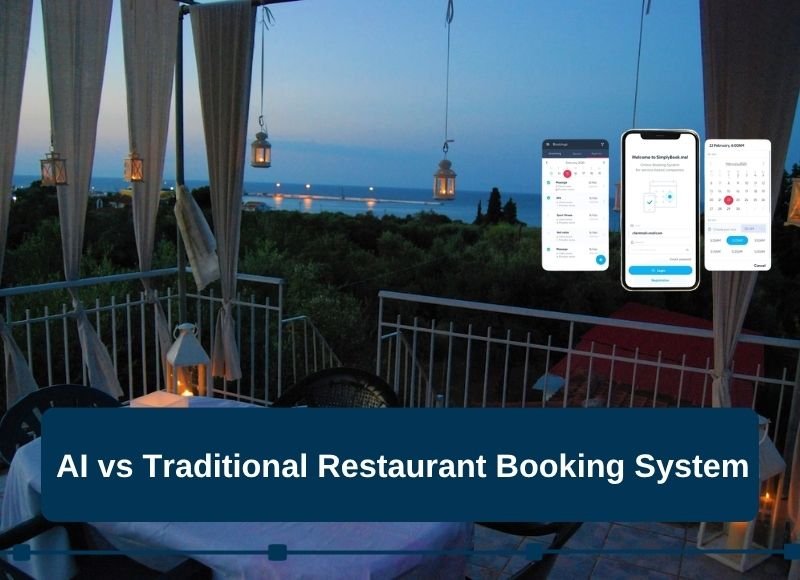
Restaurant bookings have changed a lot in recent years. Earlier, most restaurants relied on manual methods or simple restaurant reservation software. Today, many are moving toward AI restaurant booking systems.
The reason is simple. Restaurants now deal with higher demand, multiple booking channels, and rising customer expectations. This makes the comparison between AI vs traditional restaurant booking systems important for any modern restaurant.
What Is a Traditional Restaurant Booking System?
A traditional restaurant booking system works like a structured diary. It allows staff to:
- Take reservations over phone or online
- Assign tables manually
- Manage bookings based on fixed layouts
Even digital systems without AI follow the same pattern. They depend on staff decisions for:
- Table allocation
- Booking adjustments
- Handling cancellations
This works for smaller setups. But as volume increases, it creates pressure on staff and limits how efficiently space is used.
What Is an AI Restaurant Booking System?
An AI restaurant booking system goes beyond recording reservations. It helps manage bookings using real-time data and automation. Instead of fixed rules, it:
- Adjusts table allocation dynamically
- Tracks real-time availability
- Uses booking patterns to make decisions
- Automates confirmations and reminders
It turns the booking process into a system that actively improves table utilisation, booking flow, and guest experience.
Key Difference Between AI and Traditional Booking Systems
The main difference lies in how decisions are made. Traditional systems rely on staff. AI systems rely on data and automation.
Here is a clear comparison:
| Traditional Booking System | AI Booking System |
|---|---|
| Manual table allocation | Dynamic table allocation |
| Fixed floor plan | Flexible, real-time floor plan |
| Staff-driven decisions | Automated decision making |
| Limited data usage | Predictive booking insights |
| Higher chance of missed bookings | Better booking capture |
| Basic reservation management | Full booking optimisation |
This difference becomes more visible during busy hours when quick and accurate decisions matter.
How Do Traditional Booking Systems Work in Real Situations?
During peak hours, staff often handle multiple tasks at once.
They:
- Answer phone calls
- Check availability
- Adjust tables manually
- Manage walk-ins and waitlists
This leads to common issues:
- Missed calls and lost bookings
- Double bookings or errors
- Empty tables due to poor allocation
- Increased workload for front-of-house staff
The system depends heavily on experience and quick judgment.
How Do AI Booking Systems Manage Reservations Differently?
AI systems remove most of the manual effort.
When a booking comes in, the system:
- Checks real-time availability
- Assigns the best table automatically
- Updates the floor plan instantly
- Sends confirmations and reminders
If a cancellation happens, it:
- Fills the slot using waitlist data
- Adjusts nearby bookings if needed
This creates a smoother and more controlled booking flow.
How Does AI Improve Table Allocation and Space Usage?
Traditional systems treat tables as fixed units.
AI systems treat space as flexible.
They:
- Combine or split tables based on group size
- Fill gaps between bookings
- Adjust layouts during busy hours
This improves table utilisation and increases the number of covers without expanding the space.
Which System Reduces No-Shows Better?
No-shows affect revenue directly.
Traditional systems rely on manual reminders or no reminders at all.
AI systems reduce no-shows by:
- Sending automated confirmations
- Sending reminders before the booking
- Allowing easy cancellation or rescheduling
- Using deposit-based bookings when needed
This makes bookings more reliable.
Which System Increases Restaurant Bookings?
Traditional systems often miss opportunities due to:
- Missed calls
- Slow response times
- Limited booking channels
AI systems capture more bookings because they:
- Work across phone, web, and mobile
- Handle multiple bookings at the same time
- Respond instantly
This improves overall booking conversion.
How AI Affects Staff Workload and Operations
In a traditional setup, staff spend time managing bookings.
This includes:
- Rearranging tables
- Handling calls
- Fixing booking errors
With AI, most of this is automated.
Staff can focus more on:
- Guest service
- On-ground operations
- Managing dining experience
This improves efficiency without increasing staff size.
When Should a Restaurant Switch to an AI Booking System?
A restaurant should consider switching when:
- Booking volume is increasing
- Staff struggle during peak hours
- No-shows are affecting revenue
- Multiple booking channels are in use
Even mid-sized restaurants can benefit once manual systems start slowing operations.
Do Small Restaurants Need AI Booking Systems?
Not every small restaurant needs a complex system.
But even smaller venues benefit from:
- Automated reminders
- Better table management
- Reduced manual effort
The need depends more on booking activity than size.
Can AI Booking Systems Integrate with Other Tools?
Yes, most AI systems connect with:
- POS systems
- CRM tools
- Online ordering platforms
This creates a connected system where bookings, orders, and customer data work together.
Why Restaurants Are Moving Toward AI Booking Systems
Restaurants are shifting because AI solves practical problems.
It helps:
- Increase bookings
- Improve table utilisation
- Reduce no-shows
- Simplify operations
The goal is not just automation. It is better use of time, space, and demand.
A Quick Note on WizButler
Systems like WizButler focus on dynamic booking management. They allow restaurants to adjust layouts in real time and manage both bookings and events in one system.
The idea is to use space more efficiently rather than relying on fixed tables.
Final Thoughts
The comparison between AI vs traditional restaurant booking systems comes down to control and efficiency.
Traditional systems manage bookings. AI systems manage how bookings perform. As restaurant operations become more complex, systems that can handle demand, space, and timing together will become more important.
FAQs
What is the main difference between AI and traditional booking systems?
Traditional systems rely on manual input, while AI systems automate decisions using real-time data.
Can AI booking systems reduce no-shows?
Yes. They use reminders, confirmations, and booking controls to reduce missed reservations.
Are AI booking systems suitable for small restaurants?
They can be useful if the restaurant handles frequent bookings or wants to reduce manual work.
How does AI improve table management?
It adjusts table allocation dynamically and uses space more efficiently.
Is it difficult to switch from a traditional system to AI?
Most systems are designed to integrate easily, making the transition manageable.
Do AI booking systems increase revenue?
They can help increase revenue by improving booking conversion and table utilisation.