A guest does not see your systems.
They experience your service from start to finish.
From the moment they book a table to the time they pay the bill, everything should feel smooth. But in many restaurants, this journey is broken.
The reason is simple. Booking, ordering, and billing often run on separate systems.
This creates small gaps at each stage. Over time, those gaps affect service, experience, and revenue.
What Is the Guest Journey in a Restaurant?
The guest journey is the full experience a customer goes through.
It starts with booking and ends with payment.
This includes:
- Reservation
- Arrival and seating
- Ordering
- Dining
- Billing
Each step is connected from the guest’s point of view.
If one step feels slow or confusing, it affects the entire experience.
Why Is Booking to Billing Important?
Restaurants often focus on improving individual areas like reservations or POS.
But guests do not experience these as separate parts.
They expect:
- A smooth booking process
- Quick seating
- Accurate orders
- Easy payment
If these steps do not connect well, the experience feels disjointed.
This is why the flow from booking to billing matters.
What Happens When the Guest Journey Is Disconnected?
When systems do not work together, issues appear across the journey.
A guest may:
- Arrive for a booking that is not updated properly
- Wait longer because table status is unclear
- Face delays in ordering
- Experience confusion during billing
These problems often come from disconnected systems, not service quality.
Even a well-run restaurant can struggle if its systems do not align.
What Happens at the Booking Stage?
The journey begins with a reservation.
If the restaurant reservation system is not linked with other systems:
- Table availability may not reflect real-time status
- Staff may need to adjust bookings manually
- Special requests may not carry forward
This creates issues before the guest even arrives.
What Happens During Seating and Table Management?
When guests arrive, staff rely on accurate table data.
If booking and table management are not connected:
- Tables may appear free but are already assigned
- Seating decisions take longer
- Walk-ins become harder to manage
This leads to delays at the entrance.
What Happens During Ordering?
Ordering depends on coordination between front-of-house and kitchen.
If the ordering system is separate:
- Orders may not link with the booking
- Staff may re-enter information
- Communication delays may occur
This affects both speed and accuracy.
What Happens During Billing?
Billing is the final step, but it depends on everything before it.
If the POS system is not connected:
- Orders may not match correctly
- Splitting bills becomes difficult
- Payment takes longer than expected
This leaves the guest with a poor final impression.
How Do Separate Systems Break the Customer Experience?
Each disconnected system adds friction.
Instead of one smooth flow, the journey becomes a series of small interruptions.
These include:
- repeated information
- delayed updates
- manual corrections
Guests may not see the systems, but they feel the impact.
How Does a Broken Journey Affect Restaurant Operations?
Operational issues often start with system gaps.
Staff spend more time:
- checking multiple systems
- correcting errors
- coordinating between tools
This reduces efficiency and increases pressure during busy hours.
How Does It Affect Revenue?
A broken guest journey does more than affect experience.
It also affects revenue.
Restaurants may:
- lose bookings due to poor coordination
- reduce table turnover
- miss upselling opportunities
- struggle to retain customers
When systems do not connect, growth becomes harder.
What Is a Unified Guest Journey?
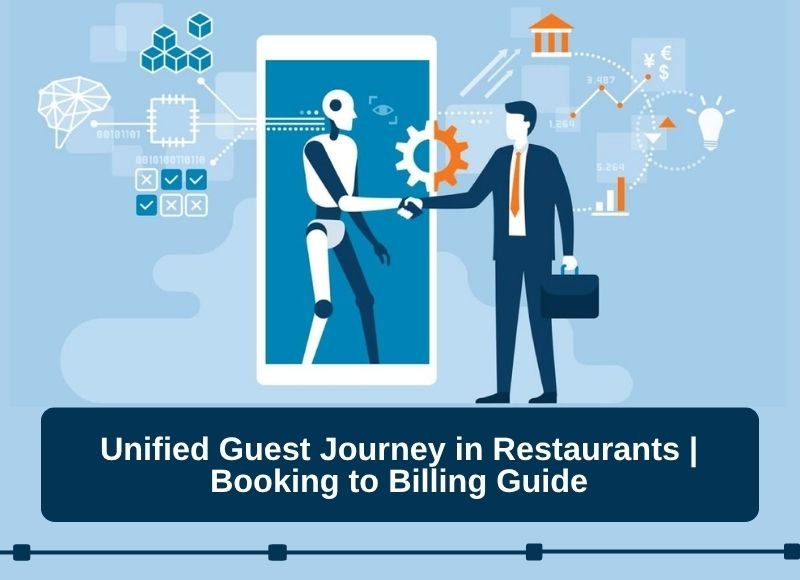
A unified guest journey means all stages work together as one flow.
From booking to billing:
- Data updates in real time
- Systems share information
- Staff work within one environment
The guest experiences a smooth process without delays or confusion.
How Do Unified Systems Improve Restaurant Operations?
In a unified system, each step supports the next.
When a booking is made:
- The table is assigned and updated instantly
When the guest arrives:
- Their booking connects with the table
When they order:
- Orders link directly to the table and guest
When they pay:
- Billing reflects all orders accurately
This removes the need for manual syncing.
How Does a Unified Journey Improve Customer Experience?
A unified system improves the experience in simple ways.
Guests notice:
- faster service
- fewer delays
- accurate orders
- smoother payment
The experience feels consistent from start to finish.
When Should Restaurants Unify Their Systems?
Restaurants should consider unifying systems when:
- They use multiple tools that do not sync well
- Staff face delays during service
- Errors in bookings or orders increase
- Customer experience becomes inconsistent
At this stage, improving individual systems is not enough.
The focus should shift to the full journey.
A Quick Note on WizButler
Platforms like WizButler focus on managing the full guest journey within one system. They connect bookings, table management, and operations so that each stage works together in real time.
Final Summary:
From booking to billing, the guest journey should feel like one continuous experience.
When systems are separate, the journey breaks into parts.
When systems are unified, everything flows together.
For restaurants, this is not just a system choice. It is a decision that affects service, efficiency, and long-term growth.
FAQs
What is a guest journey in a restaurant?
It is the full experience from booking a table to paying the bill.
Why is a unified guest journey important?
It ensures smooth service and reduces delays across all stages.
How do disconnected systems affect customer experience?
They create delays, errors, and confusion during service.
Can booking, ordering, and POS systems work together?
Yes, through unified systems that connect all stages.
How does a unified system improve operations?
It reduces manual work and keeps data consistent across the process.
Does guest journey affect restaurant revenue?
Yes, a smooth journey improves efficiency and customer retention.